 crtvai
Ever wonder how computers organize information so efficiently? The secret lies in data structures – the clever systems that make everything from search engines to social media work smoothly.
What Are Data Structures?
Data structures are simply ways to organize information in computers. They help programmers:
Create new data
Read existing data
Update information
Delete what's no longer needed
Think of them as different types of containers, each designed for specific situations.
The 7 Essential Data Structures Everyone Should Know
1. Arrays: The Organized Shelf
Like numbered cubbies in a classroom, arrays store items in exact positions. They're perfect when you need to find things by their position quickly.
2. Linked Lists: The Treasure Hunt
Similar to following clues on a treasure hunt, linked lists connect items in sequence. While not as fast as arrays for lookups, they make it easy to add new items anywhere in the chain.
3. Hash Tables: The School Locker
Just like a locker with your name on it, hash tables use unique keys to store and retrieve information instantly. This makes them incredibly fast for finding specific items.
4. Stacks: The Plate Pile
Like adding or removing plates from the top of a stack, these follow a "last in, first out" rule. Perfect for tracking steps or history.
5. Queues: The Checkout Line
Similar to waiting in line at a store, queues follow a "first in, first out" rule. The first person who joins is the first person served.
6. Graphs: The Social Network Map
Imagine a diagram of your friendships. Graphs show connections between items, making them ideal for mapping routes, relationships, or networks.
7. Trees: The Family Tree
Just like a family tree branches out, tree data structures organize information in a hierarchy. They excel at representing parent-child relationships.
Advanced Data Structures Solving Real Problems
Sometimes basic structures aren't enough for complex challenges:
B-Trees power databases and file systems by allowing multiple branches per node, making searches through massive datasets efficient.
Radix Trees help route internet traffic by efficiently handling data with common prefixes, like IP addresses.
Ropes allow text editors to handle large documents by breaking text into connected chunks rather than one long string.
Bloom Filters quickly tell you if something is definitely not in a set or might be – like efficient bouncers who instantly know who doesn't belong.
Cuckoo Hashing achieves lightning-fast lookups by giving each piece of data multiple possible storage locations.
How Data Structures Power Your Daily Life
These aren't just theoretical concepts – they're working behind the scenes in technology you use every day:
Your phone's contact list uses hash tables to find names instantly
GPS navigation uses graphs to calculate the fastest route
Social media feeds use specialized trees to organize content
Video streaming services use bloom filters to check content availability
Why This Matters
Even if you never write code yourself, understanding these fundamental building blocks helps you appreciate how our digital world works. The next time your search engine finds results in milliseconds or your navigation app instantly recalculates a route, remember: carefully chosen data structures make that magic happen.
What fascinating data structure applications have you noticed in your favorite apps? Share your thoughts in the comments!
You might also like
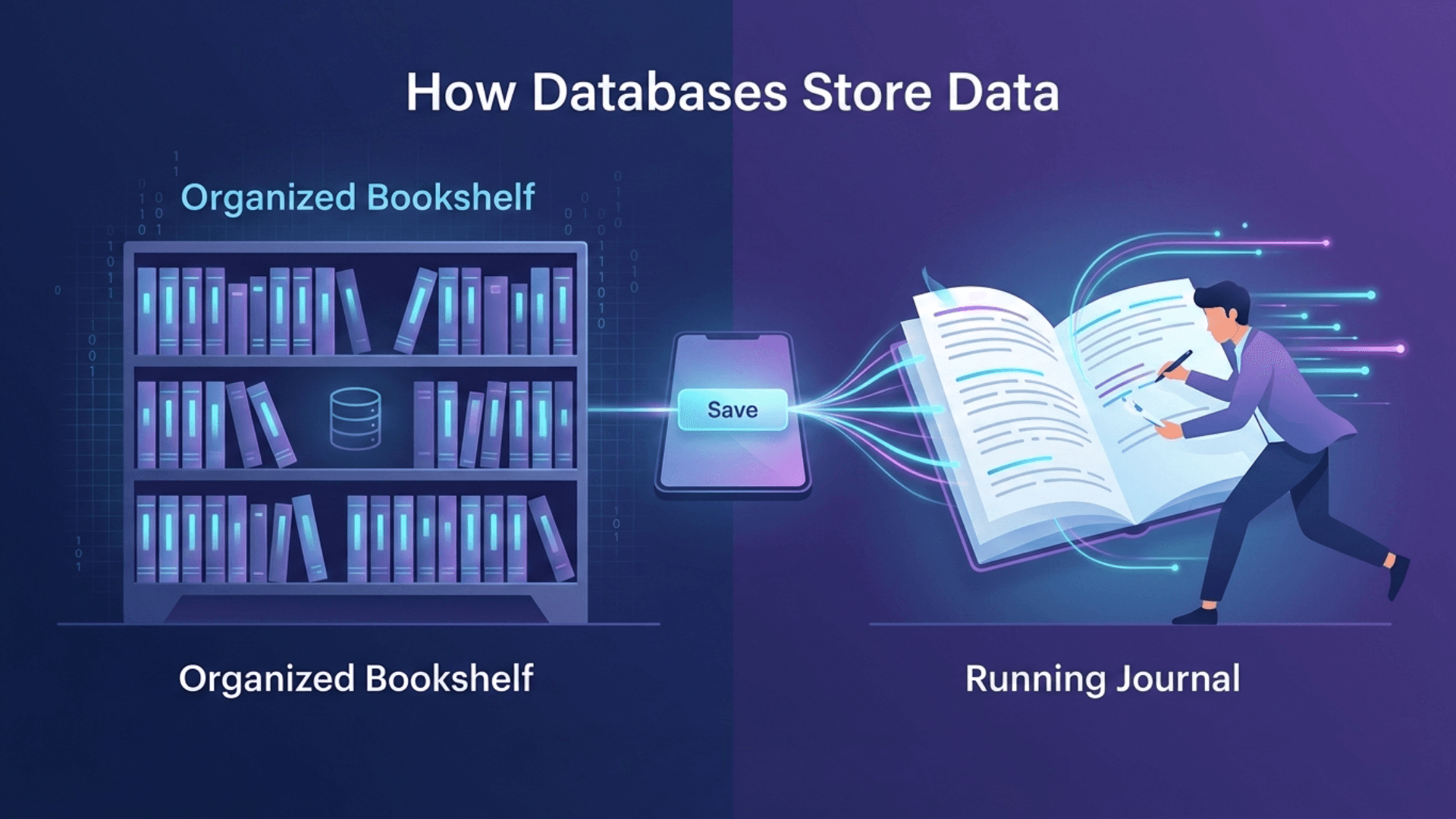
Database Storage Explained: B-Trees, LSM Trees & How Your Data Gets Saved
When you press Save, where does your data actually go? Learn how databases store information using two simple approaches — the Organized Bookshelf and the Running Journal. Easy words, real examples, no tech knowledge needed.
The Most Dangerous AI Agent on the Internet And Why 200,000 People Still Use It
An AI tool that connects to your WhatsApp, email, and files is taking over the internet. But security experts just found something alarming inside it.
What is RAG? How OpenRAG Gives AI the Right Answers
AI can't answer business questions it was never trained on. RAG fixes that. See how OpenRAG uses your own data to give accurate, real answers free and easy to set up.
Enjoy this article?
Subscribe to our newsletter to get more insights on technology, design, and the future of digital innovation.
CRTVAI
Unlock AI's full potential with expert insights from leading software innovators. Subscribe for exclusive content on ChatGPT integration, custom development solutions, and transformative technologies that deliver measurable business results.
Popular Posts
Claude Opus 4.6 vs GPT‑5.3-Codex,Two Powerful AI Models Launch on the Same Day

10 AI Companies Shaping the Future of the Middle East in 2025

Meta’s Llama AI Gains Approval for Use in US Federal Agencies